
Quick answer: There is no responsible fixed drying time for every water-damage job. Carpet, timber, plasterboard, concrete and cabinetry hold and release moisture differently, and the affected depth matters as much as the room size.
Drying time starts with how wet the materials are
A small recent leak that only affected a hard surface is different from a room where carpet, underlay, walls and timber have been saturated. The more materials that are wet, and the deeper the moisture has travelled, the more work is required to remove it.
Bulk extraction is important because drying equipment should not be expected to do the job of removing standing water.
Material type changes the drying behaviour
Carpet and underlay can release moisture relatively quickly when conditions are right, while timber, dense materials and enclosed cavities may behave differently. Cabinets, skirting and layered floor systems can also create pockets where airflow does not reach easily.
That is why technicians use moisture measurements and inspect the building assembly instead of applying one timeline to every room.
Airflow and dehumidification work together
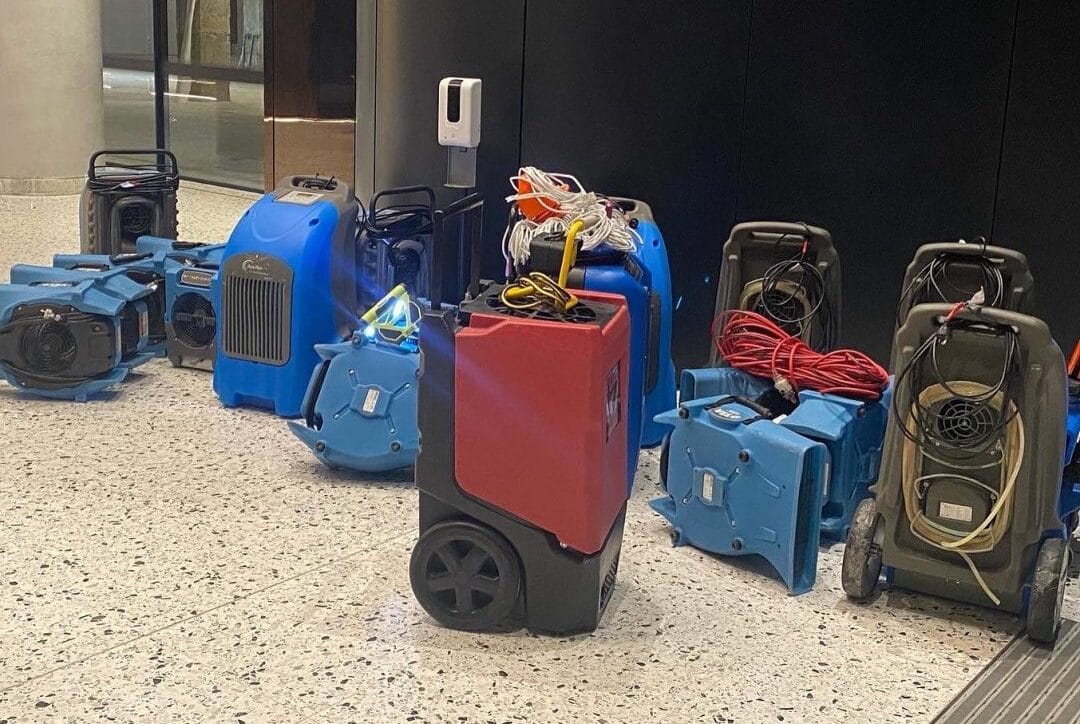
Air movers increase evaporation at wet surfaces. Dehumidifiers remove moisture from the air so evaporation can continue. The balance between those processes matters; more fans without enough dehumidification is not automatically better.
Equipment placement may change during the job as materials dry and the wettest areas become more clearly defined.
Weather and indoor conditions matter
Outdoor humidity, ventilation, air conditioning and how enclosed the property is can affect drying conditions. Simply opening every window is not always the best choice, particularly when outdoor air is humid.
A controlled drying plan uses the indoor environment deliberately rather than relying only on natural ventilation.
How technicians decide when drying is finished
Equipment should be removed because the relevant materials and conditions support that decision, not because a preset number of days has passed. Moisture readings, comparison areas and site observations help confirm progress.
Restored Right provides moisture monitoring with extraction and drying so property owners and managers have a record of the process rather than guessing from touch.
Frequently asked questions
Can water damage dry overnight?
A very small surface spill might, but significant water damage involving carpet, walls or flooring can take longer and should be assessed from actual moisture conditions.
Why are dehumidifiers used with air movers?
Air movers encourage evaporation and dehumidifiers remove moisture from the air, helping maintain drying conditions.
Can I tell if a wall is dry by touching it?
Not reliably. Surface feel does not confirm moisture conditions inside or behind the material.
Do you remove equipment after a fixed number of days?
Drying decisions should follow the site condition and moisture monitoring rather than a universal fixed duration.
Need help with this problem?
Restored Right provides Structural Drying Sydney and related restoration or cleaning services across Sydney. For urgent water damage, call 0481 825 326. For planned work, request a booking online.